
Collaborative Engineering at Leach International
 Sanaz Sheybani
Sales Executive







How our Co-development and Customization Services Work
At Leach, we help customers develop specialized power distribution equipment for their electrical systems. Rather than limiting clients to our (extensive) catalog of standard parts, we also work closely with them on custom solutions when needed.
For example, when we assist customers with switchgear selection (electromechanical and solid state), sometimes this means recommending existing configurations. Other times, we design entirely new components or equipment to match specific requirements. This collaborative approach ensures solutions that precisely address the technical challenges our customers face.
Our co-development work follows two paths. Occasionally, we spot a market need and develop products internally to establish feasibility and technology readiness level. More often, customers approach us with specific challenges they need solved and then we design, manufacture, and qualify components based on their exact needs. And our internal projects operate as co-development initiatives too, with our Sales department serving as the “customer” by providing market insights.
Customization Scope and Capabilities
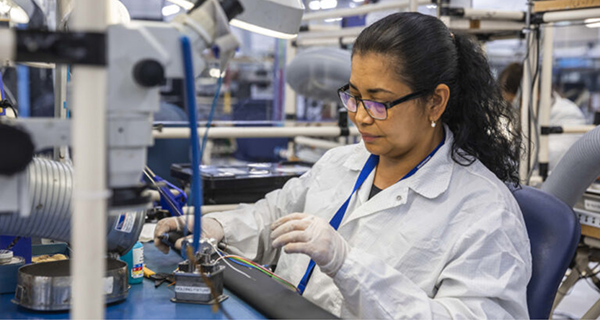
Leach supports small-batch prototypes for development programs and large-scale production runs for established systems. This is achieved through flexible manufacturing techniques, dedicated production lines configured for specialized builds, and scalable supply chain solutions that adapt to varying order volumes and maintain consistent quality and industry compliance standards.
Customization is offered across our product portfolio to meet the demands of high-reliability applications for unique operational requirements, for example:
Relays and contactors
receive custom voltage ratings, current capacities, and contact arrangements to match precise electrical specifications.
Control devices
can be engineered with customized timing, sensing, and protection solutions for specialized operational parameters.
Power distribution units
may need specific modular configurations designed for optimized electrical power management in complex systems.
Sockets and accessories
are adapted with specific mounting and connectivity options to ensure easy integration.
Smart hybrid solutions
integrate sensors and electronic modules.
Our electrical and mechanical adaptation capabilities cover voltage specifications from 28 VDC and 270 VDC up to 1000 VDC, and 115 to 230 VAC are also available. Current handling extends up to 1000 Amperes, accommodating everything from low-power control circuits to high-power distribution systems. Environmental customization addresses applications ranging from ground vehicles to commercial aerospace, military and defense aerospace, and space applications, each with distinct operational challenges.

The Engineering Team
Our engineering capability centers around a team of solution-focused experts. Our engineering leadership team brings a combined experience that exceeds Leach’s 100-year history. Our staff includes electrical, mechanical, software, and reliability engineers who specialize in matching our technical competencies to customer requirements. Our electrical design group, for example, brings particular expertise in analog and digital circuitry, establishing circuit architectures that meet or exceed requirements for weight, reliability, and power consumption.
Our team is committed to teaching the “Leach way” to newer members. Senior engineers have developed relationships with customers over decades, and our clients often remark that our engineers are “a cut above the rest.” Now, these same experienced experts are training the next generation. We’re committed to teaching as we lead, ensuring that every member of our team can answer questions, discover solutions, and drive innovation for the future of our industry.
It’s a Multi-Stage Review and Validation Process
Our engineering team conducts feasibility studies to determine whether customer requirements can be met within technical and cost constraints, and performs design optimization to find the best balance of performance, manufacturability, and cost. We use simulation tools to model electrical, thermal, and mechanical performance before building physical prototypes, helping predict how the final product will perform in real-world conditions.
Throughout the process, the team works directly with customers to refine requirements and with regulatory agencies to ensure compliance with aerospace and defense standards. We also work closely with manufacturing teams to ensure designs can be efficiently produced while maintaining quality standards. This work is structured through a New Product Introduction (NPI) framework to ensure precision, compliance, and performance optimization. It’s a process of multi-stage validation from concept to production.
We’ve successfully applied this development process across numerous programs. The Electronic Circuit Breaker Unit (ECBU) we developed for the C-130J Transport is an example – the first implementation of solid state switching devices in an airborne application. Our process has also guided the development of electrical power distribution assemblies for Unmanned Aerial Vehicles (UAVs), including the Global Hawk and many other long-range classified aircraft. This is how we know it’s effective in creating reliable solutions for mission-critical applications.
Our Approach to Product Customization
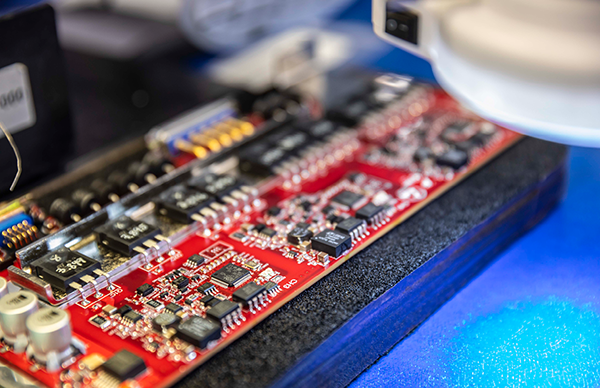
When adapting to unique customer needs, we take a balanced approach. If a customer’s request would improve quality, shorten manufacturing cycles, or provide other clear advantages, we embrace it enthusiastically. Other unique requirements are evaluated on a case-by-case basis to determine the best path forward.
Throughout the process, we incorporate customer feedback to ensure the final product meets their exact needs. Customer feedback is treated with the highest priority – it’s addressed at senior management levels, and we implement any required corrective actions to address concerns. Proactive communication keeps our customers fully aware of any technical challenges and we openly discuss any problems with them.
Ensuring Quality, Efficiency, and Cost-Effectiveness
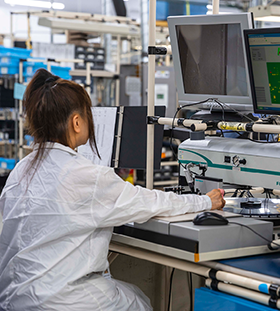
Our use of modular design principles streamlines processes through advanced manufacturing techniques, and our cost-effective material sourcing helps keep costs competitive without compromising quality. Each custom solution receives a unique part number specific to its design, enabling precise traceability and configuration control. We maintain certified quality management systems, conduct rigorous environmental and electrical testing, implement standardized manufacturing protocols with full traceability, and perform dedicated quality control inspections for each customized unit.
Our co-development approach isn’t limited to the design phase. Our services cover the entire project lifecycle, from initial design and development through production, testing, and post-sales support. This ensures continuity – the same teams involved in the early requirements stage remain engaged as projects move into production and beyond, maintaining knowledge gained throughout the process.
Real-World Success
While our product catalog features thousands of pre-certified solutions ready for immediate installation, our engineering team is always ready to develop custom solutions. Some have been integrated into programs that demonstrate the breadth of environments we can address – the Embraer E2, Airbus aircraft, Comac and helicopter platforms, military ground vehicles, Boeing 737, 747, and 777 commercial aircraft, the Hubble Space Telescope, NASA’s Curiosity Mars Rover, and military aircraft, including the F-16 Falcon and F-22 Raptor.
From the factory floor to the edge of human exploration, we design solutions that ensure real world success.

Sanaz Sheybani
Sales Executive
Sanaz Sheybani leads technical sales and business development for aerospace and defense electrical power distribution systems across the United States and Canada. At Leach International, she partners with OEMs and engineering teams to support the development and integration of advanced power architectures – including PDUs, SSPCs, relays, and contactors – enabling next-generation, higher-voltage aircraft platforms.